
In emergency and trauma care, every minute counts. Rapid X-ray imaging plays a critical role in identifying fractures, chest injuries, internal complications, and confirming the placement of tubes or lines. Conventional radiography systems, however, often require patients to be transported to dedicated imaging rooms. For critically injured or unstable patients, this movement can delay diagnosis and introduce additional clinical risk.
Portable X-ray imaging addresses this challenge by bringing diagnostic capability directly to the point of care.
Emergency environments-including intensive care units, district hospitals, rural facilities, and temporary medical camps-often operate under significant constraints. Limited space, high patient loads, and infrastructure gaps can make centralized imaging impractical. In such settings, portable X-ray systems allow clinicians to perform imaging at the bedside, enabling faster clinical decisions while minimizing unnecessary patient movement.
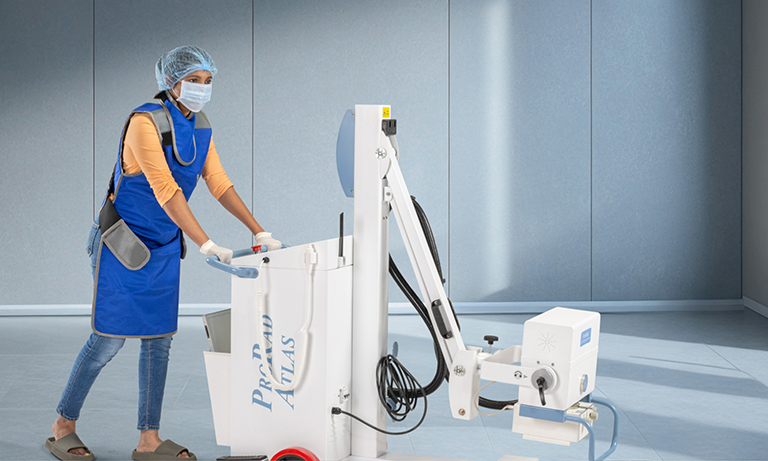
Advances in digital detector technology, battery-powered generators, and compact system design have significantly improved the performance of portable imaging systems. Modern solutions now offer reliable image quality alongside mobility and ease of deployment. Designed for demanding healthcare environments, systems such as the PRORAD ultraportable X-ray range combine lightweight construction with operational durability, making them suitable for rural hospitals, outreach programs, government trauma centres, and disaster response scenarios.
For healthcare systems serving rural and remote populations, portable X-ray imaging plays an especially important role. It supports early diagnosis, timely referral decisions, and on-site patient management-helping reduce delays caused by long-distance patient transfers. Within public health initiatives focused on expanding access to care, portable imaging also supports the broader goals of decentralised and equitable healthcare delivery.
Portability in X-ray imaging is therefore more than a technological convenience-it is a practical clinical necessity. By enabling diagnostic imaging closer to where patients receive care, portable systems help accelerate treatment decisions, improve patient safety, and strengthen emergency and trauma care across diverse healthcare settings.
-By Pranav Anand
Assistant Manager, Regulatory Affairs
Prognosys Medical Systems