
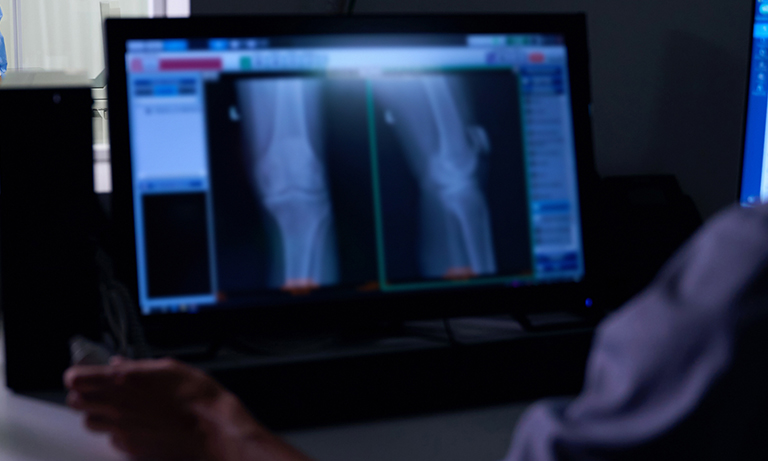
X-ray imaging remains one of the most widely used and clinically essential tools in diagnostic radiology. Since its discovery by Wilhelm Conrad Röntgen in 1895, X-ray technology has transformed medical diagnostics by enabling clinicians to visualize internal structures quickly, non-invasively, and with high diagnostic value.
From routine chest radiographs to advanced fluoroscopic procedures, X-ray imaging plays a critical role in trauma assessment, disease detection, and treatment planning. Its ability to deliver rapid insights makes it indispensable in emergency care, outpatient diagnostics, and screening programs worldwide.
How X-Ray Imaging Works
X-ray imaging is based on the principle of differential attenuation, where tissues absorb X-rays at different rates. Dense structures such as bone absorb more radiation and appear white on radiographs, while softer tissues allow more X-rays to pass through, producing darker shades.
Understanding this interaction allows radiologists and technologists to optimize imaging parameters to produce diagnostically clear images while maintaining safe radiation levels.
Technological Advancements in Radiography
Over the decades, radiography has evolved significantly. Early film-based systems have largely been replaced by digital technologies that enhance image quality, streamline workflows, and improve accessibility.
Key developments include:
- Digital Radiography (DR): Replaces film with digital detectors, enabling faster image acquisition, enhanced processing, and efficient image sharing.
- Fluoroscopy: Provides real-time imaging for interventional procedures and dynamic studies.
- Advanced Image Processing: Modern computing enables improved visualization, storage, and transmission of imaging data.
These advancements have expanded the clinical capabilities of radiology while improving operational efficiency in healthcare environments.
Radiation Dose and Image Quality
A fundamental challenge in diagnostic radiology is achieving the optimal balance between image quality and radiation dose. Insufficient exposure can result in noisy or non-diagnostic images, while excessive exposure increases unnecessary patient risk.
Modern radiology practices emphasize dose optimization strategies, including:
- Careful exposure parameter selection
- Appropriate collimation and technique
- Routine equipment quality assurance
- Protocol standardization
Although the radiation dose from diagnostic X-rays is generally low, responsible imaging practices remain essential to minimize cumulative exposure over time.
Clinical Applications of X-Ray Imaging
X-ray technology supports a wide range of diagnostic and procedural applications across healthcare:
Plain Radiography
Provides rapid imaging of bones, lungs, and soft tissues, making it a first-line diagnostic tool in many clinical settings.
Fluoroscopy
Enables real-time visualization during procedures such as catheter placement, contrast studies, and guided interventions.
Digital Radiography Systems
Offer improved image processing, workflow efficiency, and the potential for dose reduction compared to traditional film systems.
The Future of Radiography
Diagnostic radiology continues to evolve with ongoing innovations in imaging hardware, digital technologies, and workflow optimization. Emerging approaches focus on smarter imaging systems, improved automation, and enhanced dose management, ensuring that clinicians can obtain high-quality diagnostic information while maintaining the highest standards of patient safety.
As imaging technologies continue to advance, X-ray radiography remains a cornerstone of modern healthcare.
-K S Gaanashree
Marketing and Communications
Prognosys Medical Systems